Lipoza-Zn

Lipoza-Zn – Optimized Zinc for Modern Nutrition

Zinc is an essential trace mineral involved in numerous biological processes, including immune function, cellular metabolism, skin health, and antioxidant defense. However, conventional zinc forms may exhibit variable absorption and can interact with dietary components, limiting their effectiveness.

Lipoza-Zn is developed using advanced liposomal technology, which encapsulates zinc within a phospholipid matrix to enhance its stability and bioavailability. This delivery system supports improved absorption efficiency and better delivery of zinc in the body.

Liposomal Zinc offers a more effective and well-tolerated solution for nutraceutical formulations, supporting optimal zinc supplementation and broader application potential.

Our Advance Liposomal Zinc Range

Liposomal Zinc Oxide

Liposomal Zinc Sulphate

Benefits

Experience the advantages of advanced liposomal curcumin technology designed to support better absorption, stability, and overall formulation performance.

Applications

Suitable for a wide range of nutraceutical and functional health formulations across multiple dosage formats.

Capsules

Ideal for convenient daily nutraceutical supplementation.

Sachets

Designed for quick-mix and on-the-go nutritional applications.

Syrups

Suitable for liquid formulations with enhanced ingredient delivery.

Oral Drops

Ideal for precise and convenient liquid nutraceutical delivery.

Oral Suspension

Suitable for stable liquid formulations with easy administration.

Granules

Designed for versatile blending and convenient nutritional use.

Dispersible Tablets

Designed to dissolve rapidly in the mouth for easy consumption.

© 2026 OzaBio | All Rights Reserved.

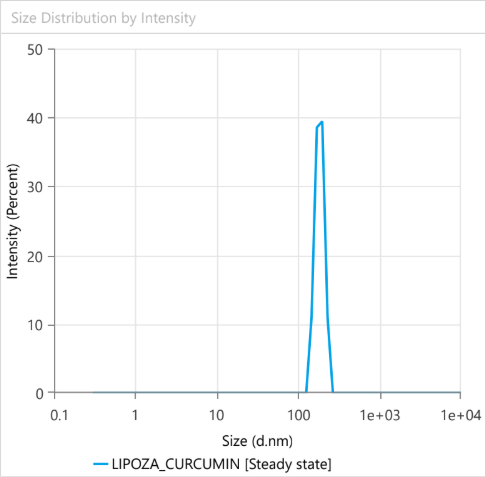
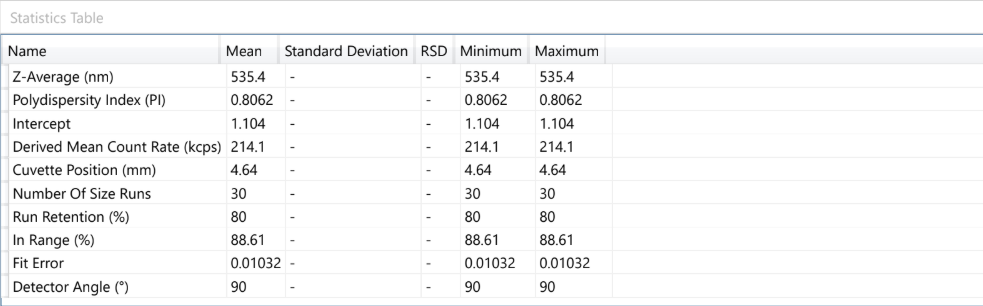
Dynamic Light Scattering (DLS) for particle size measurement

Dynamic Light Scattering (DLS) is employed to evaluate the particle size distribution and polydispersity of liposomal formulations, providing essential information on colloidal stability, dispersion uniformity, and potential bioavailability.
For example – Lipoza®-Curcumin

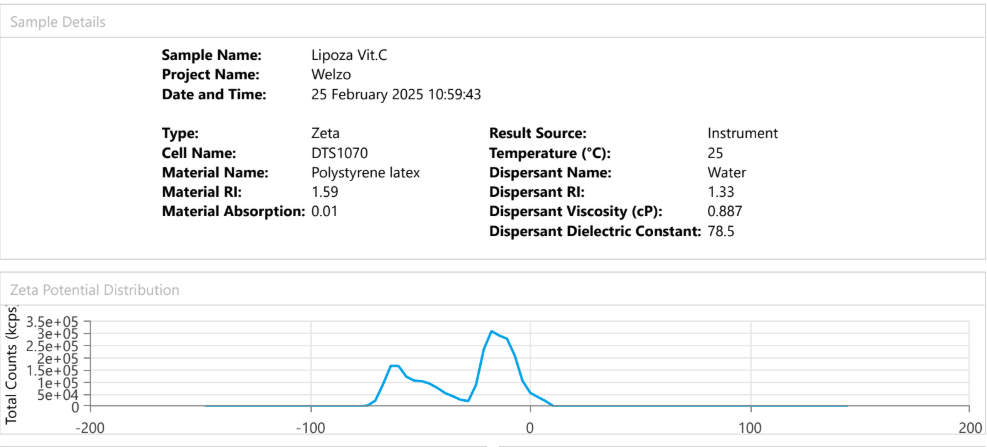
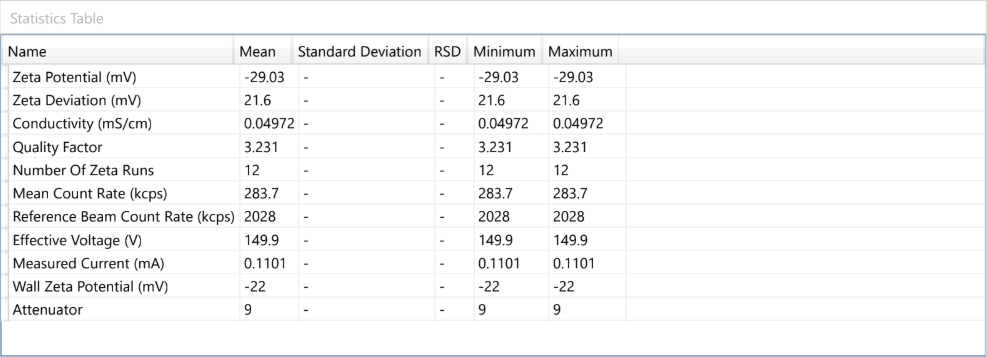
Zeta Potential Analysis for surface charge and stability

Zeta potential analysis provides insight into the surface charge and colloidal stability of liposomal formulations, where higher negative values indicate improved dispersion stability and reduced risk of particle aggregation.
For example – Lipoza®-VitC

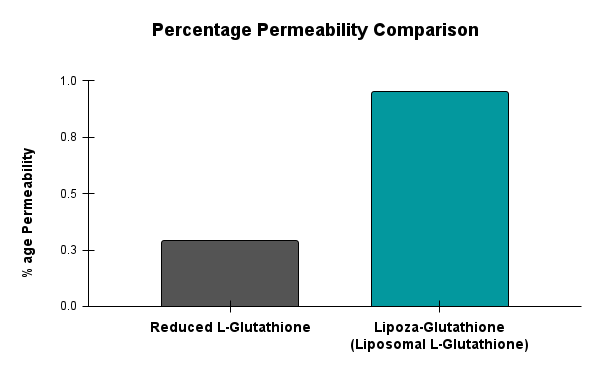
Absorption and permeability through models like Caco-2 cell lines.

Caco-2 studies utilize human intestinal epithelial cell monolayers to evaluate the permeability and predicted absorption of test substances across the gut barrier.

For example – Lipoza-Glutathione
Demonstrated superior permeability, showing 0.95% transport compared to 0.29% for Reduced L-Glutathione—an approximate 3.28-fold increase. This enhanced permeability, despite lower glutathione content, indicates improved intestinal absorption and supports its potential as a more bioavailable form of glutathione supplementation.

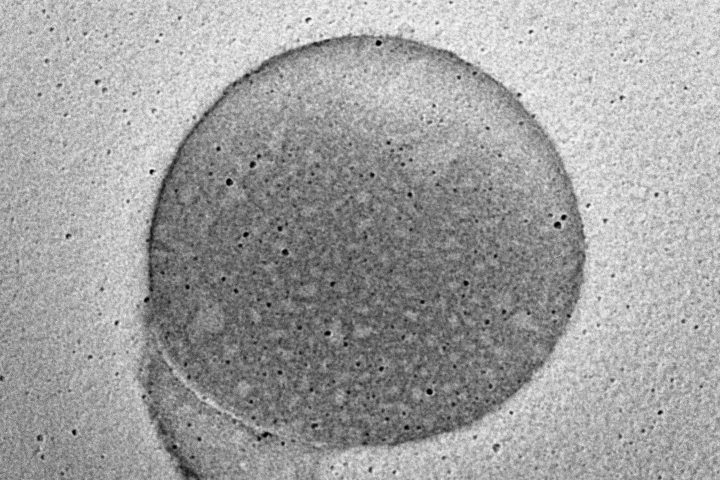
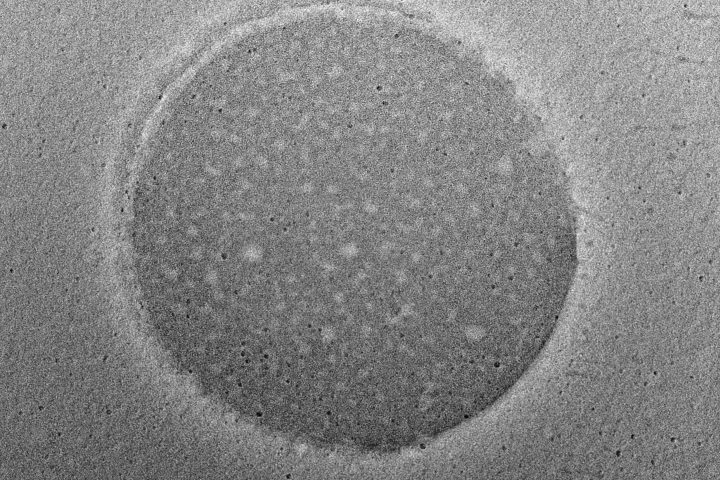
1.TEM-Based Structural Analysis of Liposomal Formulations

Transmission Electron Microscopy (TEM) provides high-resolution visualization of liposomal morphology, enabling assessment of vesicle size, shape, and internal structure. Liposomes generally appear as well-defined spherical vesicles with a distinct bilayer and a darker core region.
For example – Lipoza®-Q10

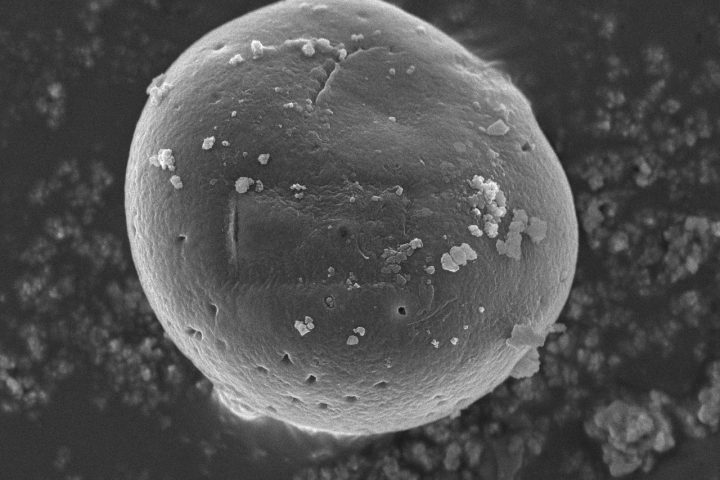
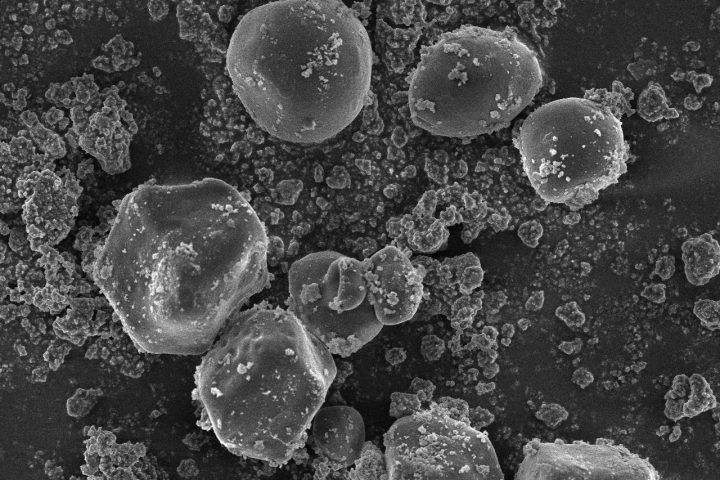
2.SEM-Based Surface Characterization of Liposomes

Scanning Electron Microscopy (SEM) offers detailed visualization of surface morphology, enabling assessment of particle texture, external structure, and overall physical characteristics of liposomal powders. This technique helps confirm uniformity, surface smoothness, and morphological integrity of the formulation.
For example – Lipoza®-Fe
ozabio
Contact Form

Contact Information

Fill out the form below and we'll get back to you soon

Form submitted successfully! We'll contact you soon.
There was an error submitting the form. Please try again.

* indicates required question